
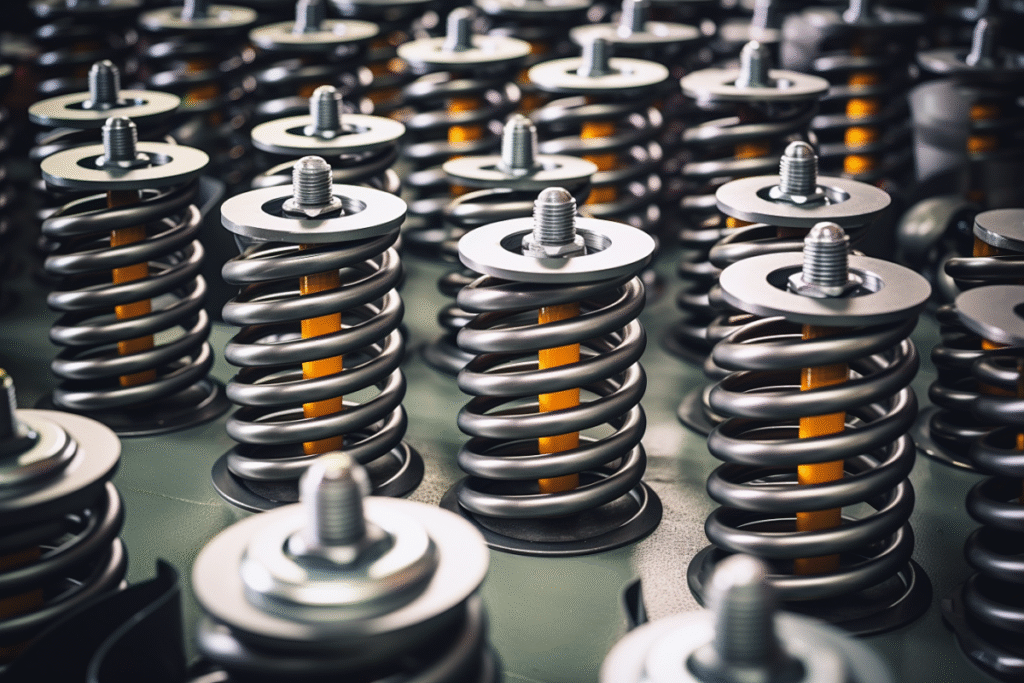
In industrial machinery, automotive systems, and high‑end equipment, springs are far more than simple components. They are critical elements that determine safety, stability, and service life. For spring manufacturers, quality is not optional—it is a mandatory technical requirement and a fundamental responsibility to customers. This blog explains the non‑negotiable quality standards in the spring industry and how our company enforces strict quality control to deliver reliable, high‑performance springs.
Core Quality Requirements for Springs
Springs operate under repeated stress, compression, and torsion. Substandard quality leads to fatigue failure, deformation, or breakage, causing downtime and safety risks. The industry sets clear, strict benchmarks for every spring.
- Material Compliance & ConsistencyOnly certified spring steel, stainless steel, and alloy wire meeting ISO 689, ASTM A228, ASTM A313 or equivalent standards are acceptable. Materials must pass tensile strength, yield strength, and chemical composition tests. Inconsistent material directly causes unstable elasticity and short service life.
- Dimensional & Geometric PrecisionTight tolerances are mandatory. Key dimensions—wire diameter, outer/inner diameter, free length, total coils, and pitch—must stay within ±0.01 mm to ±0.05 mm depending on precision grade. Deviations cause assembly failure, uneven force, and noise.
- Elasticity & Spring Rate StabilitySpring rate (force per unit deflection) must be consistent within ±1% to ±3% batch‑to‑batch. Springs must return to original shape without plastic deformation under rated load. Poor elasticity leads to functional failure.
- Surface Quality & FinishSurfaces must be free of cracks, scars, inclusions, or corrosion. Defects act as stress concentrators and drastically shorten fatigue life. Proper passivation, plating, or coating ensures corrosion resistance.
- Fatigue Life & DurabilityIndustrial springs must withstand millions of load cycles without failure. Fatigue testing, load‑deflection testing, and stress relaxation testing are mandatory to verify long‑term performance.